Mastering the RNC-MNN Practice Test: Your Ultimate Prep Guide
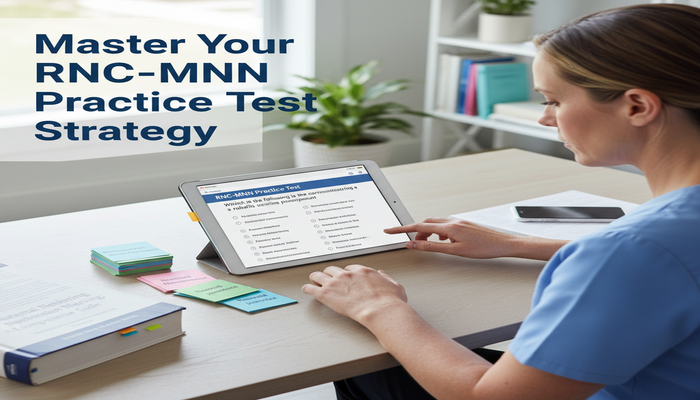
Embarking on the journey to earn your NCC Certification in Maternal Newborn Nursing (RNC-MNN) is a testament to your commitment to excellence in patient care. This prestigious certification validates your specialized knowledge and expertise in a critical field. However, passing the RNC-MNN exam requires diligent preparation, a solid understanding of the syllabus, and, crucially, effective use of an RNC-MNN practice test. This long-form guide is designed to be your supportive, practical, step-by-step companion, helping you navigate the complexities of the exam and achieve certification success.
Many aspiring RNC-MNN certified nurses find themselves overwhelmed by the sheer volume of information to master. From understanding the NCC RNC-MNN study guide to knowing the RNC-MNN exam cost and decoding the RNC-MNN exam syllabus, the path can seem daunting. This article will demystify the process, providing you with actionable strategies, the best RNC-MNN study resources, and insights into how to pass NCC RNC-MNN exam, ensuring you're well-equipped to tackle those challenging maternal newborn nursing certification exam questions.
Understanding the RNC-MNN Certification
The NCC Certification in Maternal Newborn Nursing (RNC-MNN) signifies a high level of clinical expertise and proficiency in caring for childbearing women and their newborns. This certification is a valuable credential for registered nurses working in various maternal-newborn settings, from labor and delivery to postpartum and newborn nurseries. Pursuing this certification offers numerous RNC-MNN certification benefits, including enhanced professional credibility, increased career opportunities, and a deeper sense of personal accomplishment.
Before diving into study strategies, it's essential to understand the fundamental NCC Certification in Maternal Newborn Nursing requirements and exam details. To be eligible for the RNC-MNN certification, you must be a currently licensed registered nurse in the U.S. or Canada and have sufficient experience in direct patient care within the maternal newborn specialty. Specific details regarding eligibility and clinical experience can be found on the official NCC website for detailed exam information.
Key RNC-MNN Exam Details
- Exam Name: NCC Certification in Maternal Newborn Nursing
- Exam Code: RNC-MNN
- Exam Price: The RNC-MNN exam cost is $325, which includes a $50 non-refundable application submission fee and a $275 testing fee.
- Duration: You will have 180 minutes (3 hours) to complete the exam.
- Number of Questions: The exam consists of 175 questions.
- Passing Score: The RNC-MNN passing score percentage is determined on a pass/fail basis, which is approximately 72%.
Understanding these details is your first step in effective RNC-MNN certification prep. Knowing the structure helps you manage your time during the exam and set realistic study goals. Information regarding NCC RNC-MNN exam registration and scheduling is also available on the NCC website, outlining the steps you need to take to secure your exam date.
Deconstructing the RNC-MNN Exam Syllabus
A thorough understanding of the RNC-MNN exam syllabus is paramount to your study success. This is your NCC RNC-MNN study guide blueprint, detailing all the maternal newborn nursing topics for exam content. The exam is structured around five main content areas, each with a specific weighting:
Maternal Newborn Nursing Topics for Exam
Pregnancy, Birth Risk Factors and Complications - 7%
This section, though a smaller percentage, covers crucial foundational knowledge. It assesses your understanding of various factors that can impact pregnancy and birth, from initial prenatal assessment through labor and delivery. You'll need to know about maternal history, pre-existing conditions, antepartum testing, and potential complications that can arise during gestation and parturition. This includes topics like gestational hypertension, diabetes, infections, multifetal pregnancy, and substance abuse in pregnancy. Questions may focus on early recognition, basic management, and education for these conditions. Familiarity with standard obstetric procedures and basic fetal assessment during labor is also key here.
Maternal Postpartum Assessment, Management, and Education - 26%
This is a significant portion of the exam, emphasizing the nurse's role in the immediate and extended postpartum period for the mother. Topics include comprehensive maternal assessment (e.g., vital signs, fundal height, lochia, perineum, breasts), pain management strategies, lactation support and education, psychosocial adaptation to motherhood, and discharge teaching. You'll need to demonstrate knowledge of normal physiological changes postpartum, as well as the ability to identify deviations from normal. Patient education is a major component here, covering topics like self-care, warning signs, contraception, and newborn care. Understanding cultural considerations in postpartum care is also important.
Newborn Assessment and Management - 20%
This section focuses on the care of the newborn immediately after birth and throughout the hospital stay. It covers systematic newborn assessment, including physical assessment findings, gestational age assessment, and identification of normal variations versus abnormalities. Management aspects include maintaining thermoregulation, promoting bonding and attachment, feeding techniques (breastfeeding and formula feeding), safety measures, and screening tests (e.g., metabolic screening, hearing screening). You should be proficient in interpreting newborn vital signs, understanding common newborn reflexes, and providing parent education on routine newborn care, safety, and warning signs requiring medical attention.
Maternal Postpartum Complications - 25%
Another large segment, this part of the exam delves into the recognition, management, and prevention of common and serious postpartum complications affecting the mother. Key topics include postpartum hemorrhage (assessment, interventions, pharmacological management), infections (e.g., endometritis, mastitis, wound infection), thrombophlebitis, hypertensive disorders, and postpartum mental health conditions (e.g., depression, psychosis). You'll need to understand the pathophysiology of these conditions, recognize signs and symptoms, prioritize nursing interventions, and provide appropriate patient education and support. Differentiating between normal postpartum discomforts and serious complications is critical.
Newborn Complications - 22%
This section addresses the assessment and management of various complications that can affect the newborn. Topics include respiratory distress syndrome, jaundice (physiological and pathological), hypoglycemia, sepsis, congenital anomalies, birth injuries, and withdrawal syndrome in neonates exposed to substances in utero. You'll be tested on your ability to identify at-risk newborns, recognize the signs and symptoms of these complications, initiate appropriate nursing care, and participate in interdisciplinary management. This includes understanding diagnostic tests, pharmacological interventions, and supportive care for compromised neonates. Education for parents of newborns with complications is also a key component.
By meticulously reviewing each of these areas, you can create a targeted study plan. Consider how many maternal newborn nursing certification exam questions might come from each section and allocate your study time accordingly. For a more complete understanding of each topic, you might find a comprehensive RNC-MNN certification exam guide and study plan incredibly helpful.
The Power of the RNC-MNN Practice Test
While theoretical knowledge is fundamental, applying that knowledge in an exam setting is a different skill altogether. This is where the RNC-MNN practice test becomes your most valuable study tool. Engaging with RNC-MNN practice questions and answers offers a multitude of benefits, transforming your study from passive reading to active learning.
Why Practice Tests Are Essential for RNC-MNN Certification Prep
- Familiarization with Exam Format: Practice tests expose you to the question types, structure, and pacing of the actual RNC-MNN exam. This reduces anxiety on exam day.
- Identify Knowledge Gaps: By reviewing your performance on RNC-MNN sample questions, you can pinpoint areas where your understanding is weak. This allows for focused study rather than generic review.
- Time Management: The RNC-MNN exam duration is 180 minutes for 175 questions. Practicing under timed conditions helps you develop efficient strategies for answering questions and managing your time effectively.
- Improve Critical Thinking: Maternal newborn nursing certification exam questions often require critical thinking and the ability to apply knowledge to clinical scenarios. Practice tests hone these skills.
- Build Confidence: Consistent performance on practice tests boosts your confidence, helping you believe in your ability to pass the RNC-MNN exam.
Look for practice tests that offer detailed rationales for both correct and incorrect answers. This feedback is crucial for learning from your mistakes and solidifying your understanding of complex concepts. Don't just answer questions; understand why an answer is correct and why others are incorrect.
Crafting Your RNC-MNN Certification Prep Strategy
Passing the RNC-MNN exam is not just about memorizing facts; it's about developing a comprehensive study plan that incorporates various learning methods. Here's how to pass NCC RNC-MNN exam with a practical, step-by-step approach:
1. Create a Detailed Study Schedule
Begin by mapping out your study time. Given the extensive RNC-MNN exam syllabus, allocate specific blocks of time for each content area. Be realistic about your commitments and integrate regular breaks to prevent burnout. A structured schedule helps you cover all maternal newborn nursing topics for exam without feeling overwhelmed.
2. Gather the Best RNC-MNN Study Resources
Your study arsenal should include a variety of reliable materials. This typically involves:
- NCC RNC-MNN Study Guide: Look for official or highly recommended study guides that align with the NCC exam blueprint.
- Textbooks: Current maternal-newborn nursing textbooks are indispensable for in-depth understanding.
- Online Review Courses: An RNC-MNN certification review course can offer structured learning, expert instruction, and often includes practice questions.
- Journal Articles & Research: Stay updated with current evidence-based practices in maternal-newborn nursing.
Exploring a comprehensive NCC certification guide can provide additional insights into preparing for specialized nursing exams.
3. Master the Syllabus Content
Go through each topic area listed in the syllabus. For each area, focus on:
- Core Concepts: Understand the underlying physiology, pathophysiology, and pharmacological principles.
- Assessment Skills: Know what to look for, how to interpret findings, and what constitutes a normal versus abnormal assessment.
- Nursing Management: Understand appropriate interventions, priorities of care, and collaborative approaches.
- Patient Education: Identify key teaching points for patients and families related to their care.
4. Integrate RNC-MNN Practice Questions and Answers
As highlighted, practice is crucial. After studying a content area, immediately test your knowledge with RNC-MNN practice questions and answers. Analyze every question, whether you got it right or wrong. Understand the rationale. If you consistently miss questions on a particular topic, revisit your study materials for that area.
5. Focus on Weak Areas
Don't shy away from topics you find challenging. Your practice test results will clearly indicate your weak areas. Dedicate extra time to these sections. Breaking down complex topics into smaller, manageable chunks can make them less intimidating.
6. Utilize Flashcards and Mnemonics
For quick recall of facts, definitions, lab values, and common interventions, flashcards can be highly effective. Mnemonics (memory aids) are also great for remembering lists or sequences.
7. Form a Study Group
Collaborating with peers can provide different perspectives, help clarify difficult concepts, and offer mutual support. Explaining concepts to others is an excellent way to solidify your own understanding.
8. Simulate Exam Conditions
Before your actual exam, take at least one full-length RNC-MNN practice test under timed conditions. Mimic the exam environment as closely as possible – no distractions, silent room, and strict adherence to the time limit. This helps you build stamina and manage test anxiety.
Addressing the RNC-MNN Exam Difficulty Level
Many candidates inquire about the RNC-MNN exam difficulty level. The NCC exams are known to be challenging, requiring a deep understanding of maternal newborn nursing, not just surface-level knowledge. The questions often present clinical scenarios that test your critical thinking and ability to apply best practices. The 72% passing score percentage indicates a rigorous standard. However, with a structured approach, consistent study, and effective use of maternal newborn nursing exam prep material, the exam is definitely passable.
Mastering Exam Day and Beyond
The day of the RNC-MNN exam can be nerve-wracking, but with proper preparation, you can approach it with confidence.
Tips for Exam Day Success
- Get Adequate Rest: A good night's sleep before the exam is crucial for mental clarity.
- Eat a Healthy Meal: Fuel your brain with a nutritious meal before heading to the test center.
- Arrive Early: Plan to arrive at the testing center well in advance to avoid last-minute stress.
- Read Instructions Carefully: Pay close attention to all exam instructions before you begin.
- Manage Your Time: Keep an eye on the clock and allocate your 180 minutes wisely across the 175 questions. Don't spend too much time on a single difficult question.
- Trust Your Knowledge: Rely on your extensive RNC-MNN certification prep. Avoid second-guessing yourself unnecessarily.
After the exam, results are typically provided on a pass/fail basis, with a detailed score report often available later. Achieving the RNC-MNN certification is a significant milestone that opens doors to new opportunities and affirms your role as a leading professional in maternal newborn nursing.
Frequently Asked Questions About the RNC-MNN Exam
1. What are the general eligibility requirements for the RNC-MNN exam?
To be eligible, you must be a currently licensed registered nurse in the U.S. or Canada. Specific clinical experience requirements vary but generally involve a certain number of hours in direct patient care within the maternal newborn specialty. Always check the official NCC website for the most up-to-date and detailed eligibility criteria.
2. How long should I study for the RNC-MNN exam?
The ideal study duration varies based on your current knowledge, experience, and preferred learning pace. Most successful candidates recommend at least 2-4 months of dedicated study, allocating several hours per week. A structured RNC-MNN study guide and consistent review are more important than cramming.
3. Are there official RNC-MNN practice questions available from NCC?
The NCC offers sample questions and resources through their website. While they may not provide full-length RNC-MNN practice tests directly, they often recommend reputable RNC-MNN certification review course providers and study materials that include extensive practice questions and answers. Utilizing a variety of sources for RNC-MNN sample questions is a good strategy.
4. What is the approximate RNC-MNN passing score percentage?
The RNC-MNN exam is scored on a pass/fail basis. Historically, the passing score has been approximately 72%. However, the NCC uses a scaled scoring method, meaning the exact number of questions you need to answer correctly can slightly vary based on the difficulty of the particular exam version. Focus on mastering the content rather than a specific percentage.
5. What are the key benefits of becoming RNC-MNN certified?
RNC-MNN certification offers numerous benefits, including enhanced professional recognition and credibility, validation of specialized knowledge, potential for career advancement and increased earning potential, and improved confidence in your clinical practice. It demonstrates a commitment to lifelong learning and excellence in maternal newborn nursing.
Conclusion
Achieving your NCC Certification in Maternal Newborn Nursing is a rewarding journey that requires dedication and a well-thought-out plan. By thoroughly understanding the RNC-MNN exam syllabus, investing in quality maternal newborn nursing exam prep material, and making extensive use of the RNC-MNN practice test, you are setting yourself up for success.
Remember to create a robust study schedule, focus on your weak areas, and continually test your knowledge with RNC-MNN practice questions and answers. Your commitment to excellence in maternal newborn care will shine through your preparation. Good luck on your RNC-MNN certification prep, and know that you are taking a significant step towards advancing your career and impacting countless lives. For more insights on professional growth, explore resources like nurturing professional growth through certification.


Comments
Post a Comment